
Water logistics for property maintenance are becoming more efficient: here’s how to organise the delivery of water for cleaning and watering to construction sites
Water logistics in property maintenance become more efficient when water for cleaning and watering is delivered to work sites in a planned manner rather than on an “as and when required” basis. When water is needed quickly at several sites (e.g. for sweeping, dust suppression, washing or watering green spaces), an efficient transport chain saves working time, reduces unnecessary movement of vehicles and minimises the risk of disruption. In this guide…

Voit jättää meille soittopyynnön
Jätä nimesi ja numerosi, niin soitamme takaisin saman päivän aikana.
Water logistics in property maintenance is improved when water for washing and watering is delivered to work sites in a planned manner rather than on an “as and when required” basis. When water is needed quickly at several locations (e.g. for sweeping, dust suppression, washing or watering green areas), an efficient transport chain saves working time, reduces unnecessary movement of vehicles and minimises the risk of disruption. This guide outlines best practices from routing to filling, use and emptying – and how to implement an IBC-based solution safely and consistently.
Water logistics in property maintenance begins with an assessment of needs
Before choosing a tank, rack or route, it is worth determining the nature of the work: is the water requirement occasional (e.g. a one-off wash), periodic (weekly sweeping/area cleaning) or continuous (dust suppression during the hot season)? In property maintenance, the work is often mobile: sites change, surface areas vary and the demand for water can rise unexpectedly. Once these requirements have been recorded, it is considerably easier to plan water logistics.
The next step is to identify the “bottlenecks”: where the water is filled, how long the transfer distances are, and what causes the most delays (queues for filling, connecting hoses, unclear responsibility arrangements, inadequate fastenings). A standardised process reduces the need for improvisation: the same tank design, the same connectors and the same method of securing the load every time. When practices are consistent, the quality of work improves and induction is faster.
Quick needs assessment Always make a note of these before making any decisions on equipment, so that the water logistics are properly planned.
Water volume per location Estimate litres per day: sweeping and dust collection can use a surprising amount.
Method of use Is the water supplied under pressure, by gravity or via a pump/spray?
Refill points and opening hours Where can I be sure to top up my petrol, and at what time – including at weekends?
Transfers and routes Rough estimates of journey times, turning points and combinations of destinations within the same tour.
Safety and fastening How is the tank secured to the machine so that it does not move when subjected to vibration or on an uneven surface?
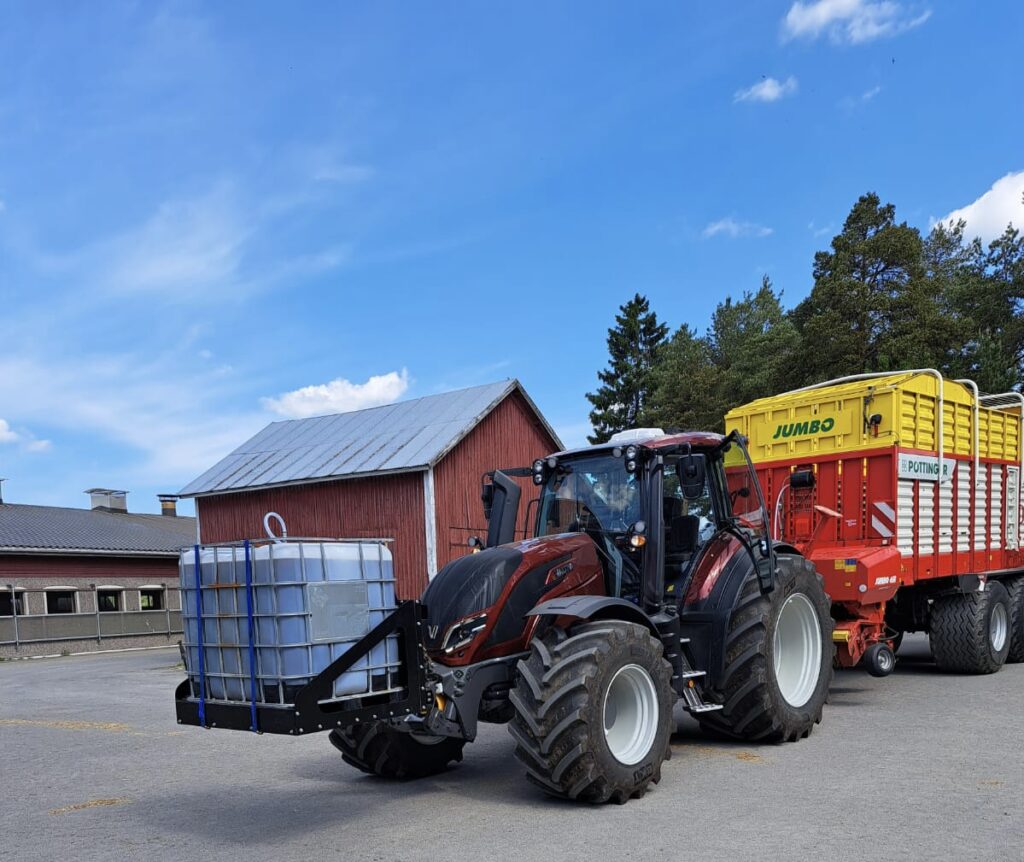
Once the basics are in place, it makes sense to choose a combination that works well in day-to-day operations: an IBC container + a sturdy rack + clear filling and emptying procedures. Lootu Oy (Kempele, Pekurinpolku 3) manufactures sturdy, easy-to-install metal IBC container racks for tractors and wheel loaders, which are ideal for mobile property maintenance and contracting work.
Getting the equipment right: an IBC container and rack make water transport a repeatable process
In property maintenance, reliable water transport relies on the tank remaining securely in place and on the fact that both filling and emptying can be carried out using the same connectors, regardless of the location. The IBC container is a practical choice for many, as it is widely used, readily available and of a suitable capacity for many cleaning and watering tasks. However, it is not just the container that is essential, but how it is supported and secured.
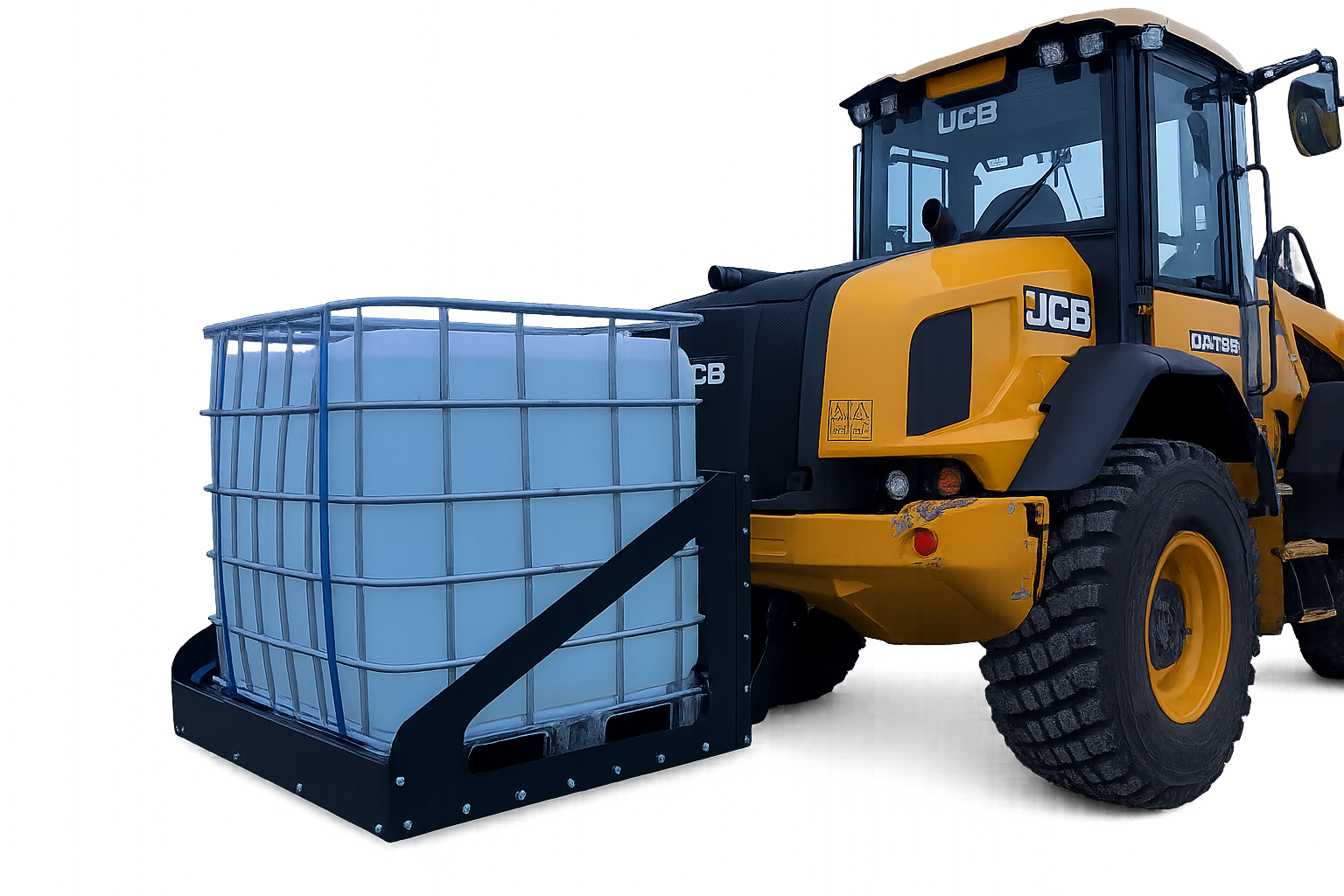
The purpose of the frame is to ensure that the combination is safe and efficient: it stabilises the load, makes lifting easier and reduces the risk of damage to both the container and the machine. When an IBC is being transported on a tractor or wheel loader, the rigidity of the frame, the positioning of the attachment points and the ergonomics of use have a direct impact on the smooth running of the operation. Lootu Oy’s solutions emphasise practical application: the racks must withstand vibration, weather fluctuations and repeated use without the need for specialised tools.
When considering your equipment, make sure you also familiarise yourself with the basic safety information and responsibilities. For example, you can find a concise overview of the principles and requirements for securing loads load securing from a source that deals with this. Even if everyday life consists of “nothing more than a few steps across the garden”, the same physics applies: mass moves and comes to a halt – and if the safety measures aren’t up to scratch, the consequences can quickly become costly.
If you wish to explore rack selection in more detail, specifically from the perspective of load and mounting points, please refer to the in-house guide: How to choose the right IBC container rack. Similarly, from a safety perspective, it is worth reading: Transporting an IBC container safely on a tractor: the 7 most common mistakes.
Once water logistics have been standardised – the same equipment, the same connectors and the same procedures – the construction site will not come to a standstill due to a lack of water, nor will time pressure force workers to take dangerous shortcuts.
Routing and scheduling: water logistics in property maintenance yield the greatest savings in “transit time”
Often, the greatest savings come not from a larger tank but from a better round. It’s worth planning the route as you would a maintenance round: combine nearby locations, schedule refuelling for a “natural” point in the day (e.g. before a long sweeping session) and set aside the return journey or emptying as a clear final stage. When a day’s schedule includes several locations in the Kempele and Oulu areas or longer journeys to places such as Raahe, Kajaani or Kokkola, even minor errors in the timetable can quickly add up.
A good practice is to divide the day into three modules: 1) filling and checking, 2) operations at the sites, 3) emptying/maintenance and preparation for the following day. This way, the driver or machine operator knows when to stop to refill and when not to – and water logistics do not become a “decided on the fly” situation. If there are different types of tasks at the sites (dust suppression, washing, watering), mark these on the route as well: the volumes used and the method of unloading will vary.
Practical rules for routing These measures will help you reduce unnecessary journeys and ensure there is enough water for the destination.
“The ”two items per refill’ principle Plan your route so that you can complete at least two tasks in the local area on a single tank of fuel.
Filling times finalised A fixed schedule reduces queuing and makes shift planning easier.
Reserve water and risk buffer Leave a bit of a “safety margin” for any unexpected extra expenses, especially during hot spells.
Turning and parking spaces Mark, for each location, where the equipment can be stored safely and where hoses can be connected.
If you frequently carry out brushing and dust-binding work, do take a look at Lootu Oy’s solution and tips for use on the page Water for brushing. When the same concept is applied across several locations (Liminka, Tyrnävä, Kuopio, Joensuu, Vaasa), there are fewer variables to consider when planning routes, and management is better able to anticipate the overall picture.
Filling and commissioning on site: speed is achieved through standardised connectors and inspection routines
During the filling stage, time is surprisingly often taken up by “minor” issues: an adapter is missing, the end of the hose doesn’t fit, the position of the valve is unclear, or the condition of the tank hasn’t been checked. That’s why it’s worth establishing a specific routine for filling, which is followed in the same order every time. Once the routine is second nature, even new staff can get up to speed quickly, and the number of errors will decrease.
In practice, this also means that you always carry the necessary equipment with you: hoses, seals, the necessary wrenches, a filter (if water is taken from different sources), as well as a clear label indicating the intended use of the water. If the same equipment is also used for other liquids (e.g. preservatives or liquid fertilisers in a farming environment), keep the different uses separate and ensure the equipment is cleaned to minimise the risk of contamination.
A brief note
Once installation and commissioning have been carried out correctly, day-to-day operations in water logistics become considerably smoother. Always check the mounting and the operating instructions before your first day’s work with the new combination.
When setting up the water supply on site, ensure that the tank remains under control at all times: the machine must be on level ground, the discharge direction must be planned, and the hoses must not pose a tripping hazard or obstruct traffic. If the work is being carried out in outdoor areas, also bear in mind the customer’s day-to-day life: pedestrians, parking and gateways. Good water logistics also contribute to a positive customer experience, as the work is perceived as less of a disruption.
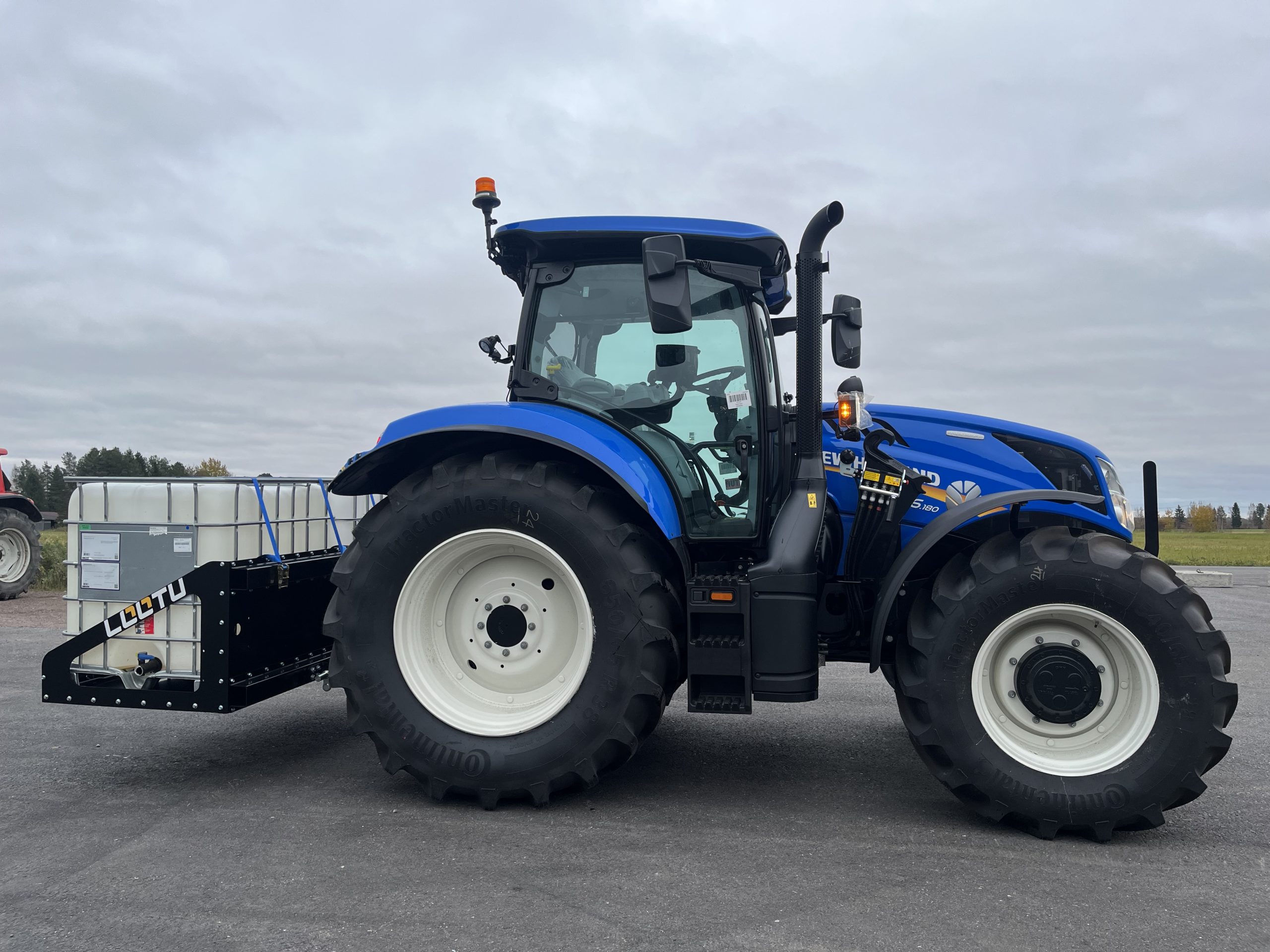
The advantage of a manufacturer such as Lootu Oy is that the racks are designed specifically for practical use: they have a sturdy structure, are easy to handle and can be installed without the need for unnecessary adjustments. As the rack can be used with both a tractor and a wheel loader, the same operating model can be applied to different machines and different teams – and that translates directly into greater efficiency.
Emptying, maintenance and hygiene: the final step ensures a smooth start to the next working day
In water logistics, emptying and maintenance are easily overlooked in the rush, even though they are precisely what determine how smoothly the next day gets off to a start. If water or contaminants remain in the tank, or if the valves are in the “wrong position”, the problem carries over and becomes a recurring issue. Make draining part of your standard end-of-shift routine: use the same location, the same checklist and make a note of any deviations.
When carrying out maintenance, it is important to check both the condition of the tank and that of the mounting frame. Check that the frame and mounting points are not damaged, and that the locking mechanisms are working as intended. If the work involves driving on uneven terrain or frequent braking, checking the fixings is not just a “precaution” but an essential requirement. In property maintenance in particular, vehicles are constantly encountering kerbs, ramps and narrow courtyards.
| Stage | Objective | A quick check |
|---|---|---|
| Filling | The right quantity and the right quality for the intended use | Fittings, valves, checking for leaks and labelling “for which purpose” |
| Transport | A safe transfer without the load moving | Securing, scaffold locking mechanisms, visibility and hazardous points along the route |
| Use at the site | Quick serving and neat presentation | Hose routing, discharge direction, demarcation of the work area and control of runoff |
| Draining & Maintenance | The next day got off to a smooth start | Residual water, cleaning, valve positions, visual inspection of the rack |
Once these steps have been standardised, water logistics in property maintenance becomes a “process” rather than a task reliant on the memory of individual staff members. This is also reflected in the costs: fewer broken fittings, less wasted time and fewer complaints about work being left unfinished because the water ran out.
Why are Lootu Oy’s racks a sensible choice for water logistics in property maintenance?
When water supply operations are mobile and sites change frequently, the reliability and ease of installation of the equipment become particularly important. Lootu Oy is a Finnish manufacturer of metal products based in Kempele, and the company’s core business lies in practical applications: sturdy, safe and easy-to-install racks for IBC containers. The racks are suitable for tractors and wheel loaders, which is a major advantage in property maintenance, as the machinery used varies depending on the job.
Lootu Oy’s solutions can be used in a wide range of applications: for the transport of irrigation water, washing water and also, for example, preservatives and liquid fertilisers. In property maintenance, the concept of “irrigation water for brushing” is particularly relevant: when the same system serves both brushing and cleaning tasks, seasonal work during the summer is not interrupted by logistical issues. On farms, this same design philosophy reduces handling and improves day-to-day safety.
Benefits in day-to-day work In this way, the rack-based solution supports mobile water supply at various locations.
Faster roll-out When the rack is easy to handle, the working day begins with getting on with the job, not with fiddling about.
Safer transport A stable base and clearly defined securing points reduce load movement during transit.
Versatility The same concept applies to washing, watering and seasonal peaks in the construction industry.
Can be scaled to different locations Once the process is standardised, it is easy to transfer it from Oulu to Vaasa or from Kuopio to Joensuu.
If you’d like to see an overview of the products and options, take a look at the pages Products and Water tank for a tractor. Once water logistics have been developed into a sustainable system, the results are clear to see: fewer disruptions, a more consistent workflow and safer day-to-day operations – both in property maintenance and on farms.

Finally: if you want to improve the efficiency of your water transport as early as next working week, start small – standardise your connectors, establish a filling and emptying routine, and ensure that everything is securely fastened. After that, it’s easy to adjust your routes and choice of vehicles to suit your specific contracts in Kempele, Oulu and other target areas.
Boost your water transport with a single sensible upgrade
If you want to minimise interruptions and ensure the safe transport of water, choose an IBC container rack suitable for everyday use and a clear operating procedure.
Frequently Asked Questions
What is the most efficient way to organise the transport of water for washing and irrigation to several construction sites?
What size IBC container should you choose for property maintenance work?
What should you check before setting off with an IBC container on a tractor or wheel loader?
How should you go about draining and cleaning the system to ensure the next working day runs smoothly?
Who are Lootu Oy’s IBC container racks best suited for?
Interested? Get in touch with us!
Please get in touch with us using the form below