
Seasonal farm work in Kuopio, Joensuu and Kajaani: how to ensure the safe transport of liquids from spring to autumn
Seasonal farm work in Kuopio, Joensuu and Kajaani raises one recurring question: how do you ensure the safe transport of liquids from spring to autumn, when schedules become tighter and conditions change from week to week? When irrigation water, wash water, preservatives or liquid fertilisers are transported from the farmyard to the fields and back, safety isn’t achieved by just one…

Voit jättää meille soittopyynnön
Jätä nimesi ja numerosi, niin soitamme takaisin saman päivän aikana.
Seasonal farm work in Kuopio, Joensuu and Kajaani raise one recurring question: how do you ensure the safe transport of liquids from spring to autumn, when schedules become tighter and conditions change from week to week? When irrigation water, wash water, preservatives or liquid fertilisers are transported from the yard to the field and back, safety isn’t achieved by a single measure, but through a clear, comprehensive approach: the right rack, the right fastenings, the right routines and risk management that adapts to the season.
Lootu Oy (Pekurinpolku 3, 90450 Kempele) manufactures sturdy, easy-to-install IBC container racks for tractors and wheel loaders, designed for Finnish conditions. This article outlines practical methods for keeping the transport and handling of containers under control, from the clay soils of the Kuopio region to the hilly yards of Joensuu and the long journeys in Kajaani – throughout the entire season.
Seasonal farm work in Kuopio, Joensuu and Kajaani: seasonal risks mapped out
From spring to autumn, the risks are not the same, even if the vehicles are the same. In Kuopio, the combination of fields and farm tracks often means vibrations and an uneven surface; in the Joensuu area, hilly terrain and gradients increase dynamic loads, whilst in Kajaani, long journeys and varying weather conditions highlight the importance of securing the load and following established routines. The common factor is that the liquid “lives” with the load: movement, heat and stops alter the nature of the load.
In spring, the biggest challenges are the rush and the fluctuations between cold and warm temperatures. When a tank is taken out of storage and put into service, the materials, valves and seals may be cold, and the first runs are often carried out on tracks broken up by frost. In summer, the focus shifts to heat: the warming of the liquid, the potential for vapourisation in certain chemicals, and the long days all increase the likelihood of human error. In autumn, on the other hand, wet and slippery conditions increase the risk of overturning and loss of control, both in farmyards and at the edge of fields.
Risks recurring throughout the period Once you’ve identified these, you can establish standard routines and simply update the details specific to each season.
Vibration and jolts Uneven farm tracks, drainage ditches and turning points place constant strain on the trailer and its fixings.
Temperature fluctuations Seals, valves and plastic components behave differently in cold and hot conditions.
Busyness and interruptions Charging whilst on a call or plugging it in “just for a moment” increases the risk of forgetting to back up your data.
Spills and splashes Even a light drizzle can make the ground slippery and impair workplace ergonomics.
If you are transporting classified dangerous goods, the requirements may be stricter than those for standard waterway logistics. A good general source for basic concepts is the ADR Agreement (European Road Transport Regulations), which you can access, for example, at Wikipedia summary throughout. In practice, it is important to identify what substance is being transported and under what conditions – and to structure day-to-day operations accordingly.
Safety in the transport of liquids starts with the rack solution and compatibility
Safe transport begins with ensuring that the IBC container is a genuinely controlled load – not a compromise that “just sits in the yard”. When a rack is designed for use with a tractor or wheel loader, it supports the container correctly, guides the load in a controlled manner and ensures that securing it is a repeatable process. The core of Lootu Oy’s concept lies specifically in practical application: the racks must withstand pressure, vibration and weather fluctuations, whilst being easy to install without the need for specialised tools.
A common phenomenon can often be observed in the seasonal workloads in Kuopio, Joensuu and Kajaani: the same tank is used for multiple liquids. This streamlines day-to-day operations, but places greater demands on cleaning, labelling and monitoring the condition of valves. If you’d like a broader overview of usage practices, take a look at this background article too: An IBC container on a farm: a versatile solution. When the intended uses are clear, it is easier to choose the right rack, mounting method and maintenance routine.

It is worth checking compatibility before the busy season begins: what size IBC container do you use, where on the machine’s chassis does the load pass, and how does a full container behave during lifting and braking? As well as the rack, it is crucial that the attachment points are in good condition and that the container is always secured in the same way. If you’re unsure about which rack to choose, here’s a useful article to read: How to choose the right IBC container rack.
When scaffolding, securing and inspection are carried out in the same way every time, a rush does not compromise safety – and the peak season won’t catch you off guard.
Seasonal farm work in Kuopio, Joensuu and Kajaani: practices in spring and early summer
The same pitfalls recur in the spring: equipment is brought into service quickly, and the first movements are carried out on surfaces where frost damage and soft edges cause the load to sway. At this stage, it is worth paying attention to two things: (1) check the frame and fixings before the first full load, and (2) introduce a “first load” routine, in which the load is increased in a controlled manner. By initially filling the container to only a fraction of its capacity, you can observe how the entire system behaves without incurring maximum risk.
In early summer, the work often becomes fragmented: in the course of a single day, you might be watering, washing and moving between different plots. This is precisely the stage when labelling and a consistent approach are crucial. Ensure that the tank is labelled according to its contents and that the valve orientation and hose routing are always the same. Even a minor “one-off exception” can lead to several near-misses over the course of the season, particularly when shift changes take place.
Spring start list Do these things before the season gets properly underway.
“Dry run” for fixings” Load and secure the goods in one go, without rushing, so that everyone remembers the order.
Checking the valve and tap Check that the latches are secure and that they can be operated even whilst wearing gloves.
Platforms and routes Choose a route in the garden with the fewest potholes and the least side slope.
The first load is half full Observe the movement of the load and make any necessary adjustments before the load is fully loaded.
A brief note
If there are several employees, create an illustrated “quick guide to clamping” and keep it with the machine. This will minimise variation and speed up induction training.
Take a look at the 7 most common mistakes and how to avoid them
Summer and late-summer routines: keeping vibration, heat and rush under control
In summer, many things seem easy because visibility is good and work goes smoothly. Yet summer is typically the peak season for “breaks in routine”: when everything is running smoothly, people start to cut corners. However, vibration is constant, and the mass of the IBC container (especially when partially full) can cause swaying that puts strain on both the trailer and the machine’s chassis. That is why inspection intervals are particularly important in the summer: a quick check at the start of the day and another, if necessary, during the day if the routes are bumpy or there are a lot of transitions.
Temperature fluctuations also affect liquids: whilst the warming of water is rarely a safety risk in itself, it does alter the behaviour of hoses, fittings and seals. With preservatives and liquid fertilisers, there is also an increased risk of splashing and exposure. A practical measure is to keep the “clean and dirty sides” clearly separate: transport, dispensing and storage should be organised so that the ends of hoses do not dangle onto the ground or onto the machine’s steps. If you use preservatives, it is also worth familiarising yourself with Lootu Oy’s solution and method of use: preservative rack.
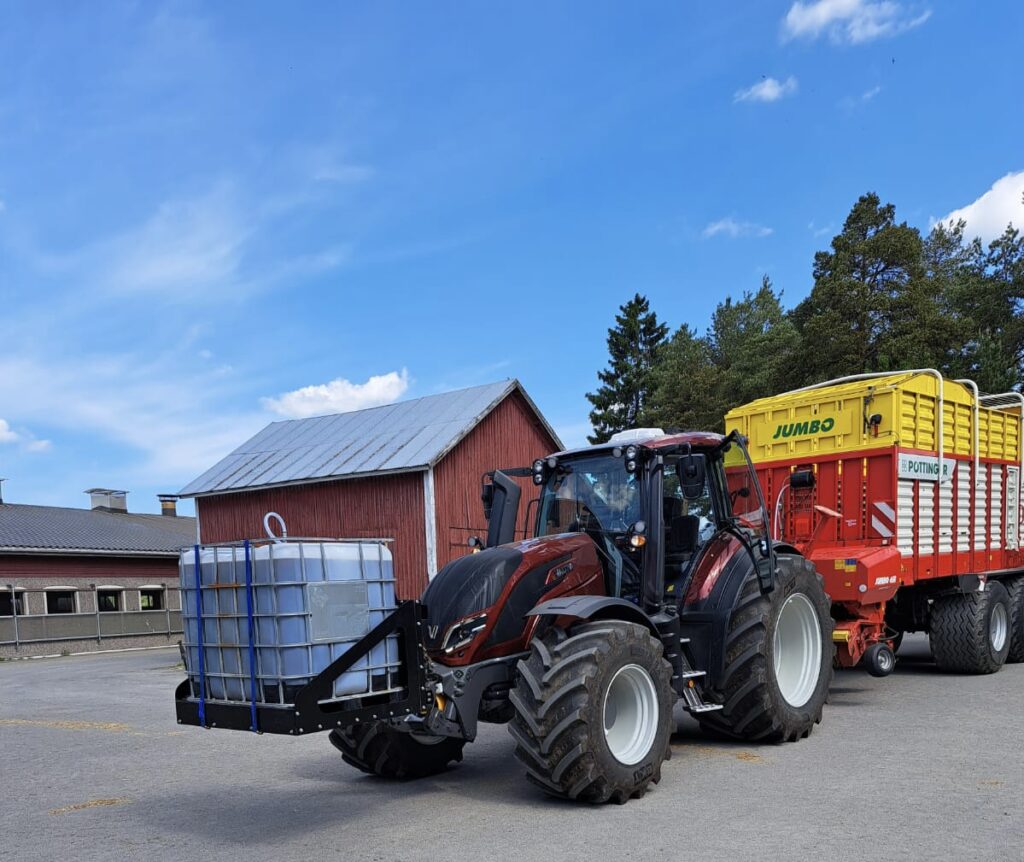
In the hustle and bustle of summer, one of the most effective ways to improve safety is to carry out a “three-point check”: before setting off, check (1) the fastenings, (2) the valve and (3) the surroundings and people around the machine. This takes 10–20 seconds, but it breaks the autopilot and reduces errors, particularly when working long hours and at multiple sites.
The autumn season: slippery conditions, darkness and washing water – here’s how to get through the season safely
In autumn, the yards and field edges in Kuopio, Joensuu and Kajaani quickly become slippery. In addition, there is less daylight, and work tends to be scheduled more often in the mornings and evenings. This has two implications for the transport of liquids: the driver’s judgement is impaired by fatigue and the conditions, and controlling the load becomes more difficult when the chassis loses grip. In autumn, it is advisable to shift the focus from speed to manoeuvrability: make gentler manoeuvres, take wider turning circles and avoid ruts on slopes where possible.
Autumn is also the time for cleaning and maintenance. Transporting and using water for cleaning are important parts of daily life, but a wet environment increases the risk of slipping, and splashes can freeze on frosty days. That is why, in autumn, it is worth ensuring that working around the tank is ergonomically sound: hoses are not in the way, steps are kept clean, and emptying is carried out in a controlled manner. From a property maintenance perspective, the same logic applies to sweeping and washing tasks; you can find further insights on this page Water for brushing, even if the operating environment were a construction site rather than a farm.
Autumn checks When the weather takes a turn for the worse, even the smallest details make all the difference.
Friction and cleanliness Keep the machine’s lifting surfaces and the rack’s contact surfaces free of mud and splashes.
Visibility Ensure that the work lights are on and, if necessary, add reflective markings to the load.
Draining and rinsing Carry out the end-of-season cleaning straight away to minimise the risk of freezing.
Store in a dry place Store the tank and accessories in such a way that the valves are not covered by weight or dirt.
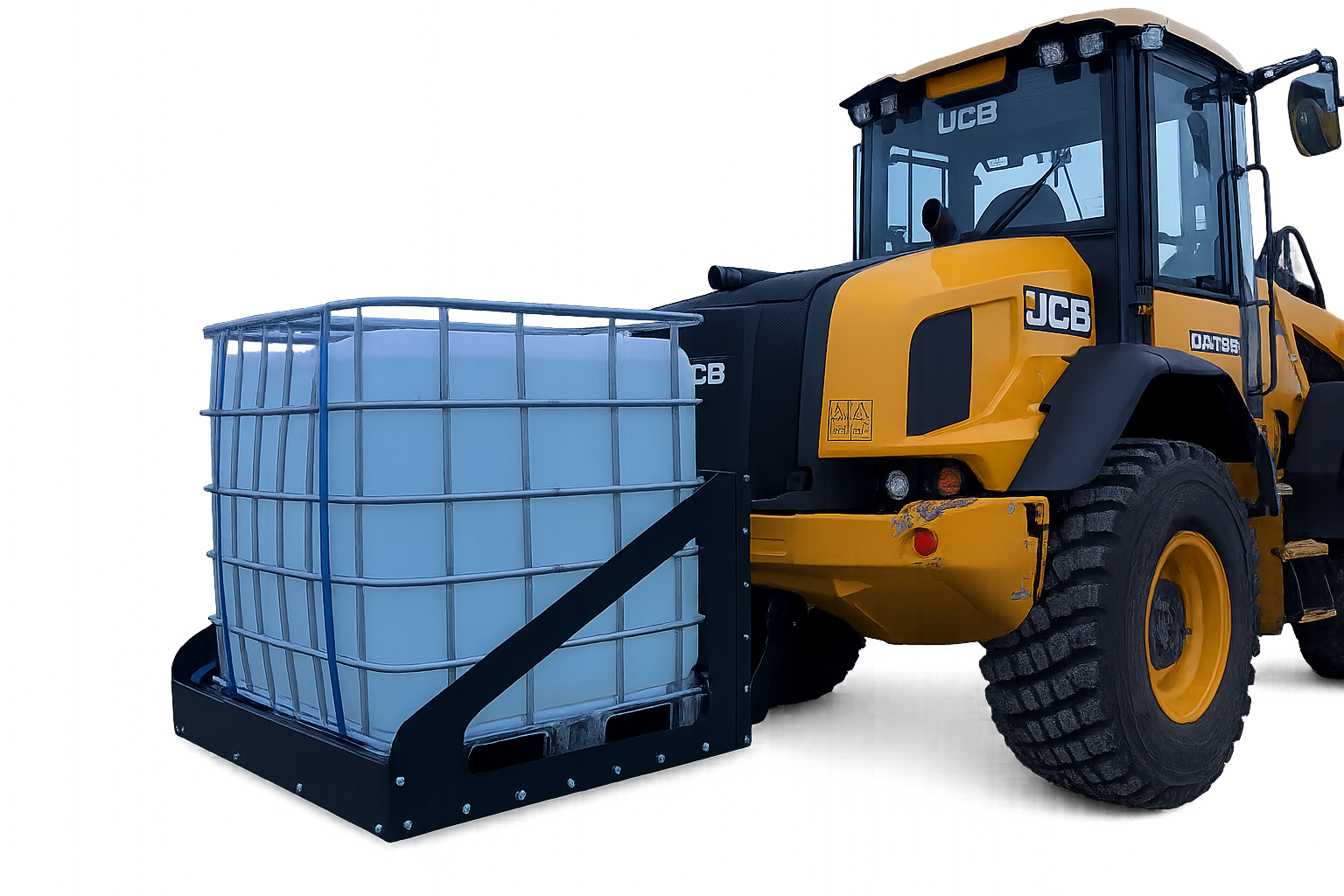
When the season ends, carry out one final “pre-storage maintenance” check: check the rack’s fixings, areas of wear and any dents. If your aim is to ensure a long service life and safety in everyday use, it’s best to schedule maintenance before the harshest frosts of winter set in. You’ll find some useful practical tips on maintenance routines in the article Maintenance and inspections.
A quick comparison: what to check during different seasons (and why)
The summary below helps to make seasonal risk management a practical reality. The aim is not to increase bureaucracy, but to ensure that you check precisely those areas that are most likely to go wrong during that particular period. When the check is brief and regular, it actually gets done even when you’re in a rush.
If several machines (a tractor and a wheel loader) or several drivers are in use, the table can also serve as a support for induction training. The same approach can also be applied to property maintenance, where there are many changes of location and work is often carried out near traffic or in courtyards.
| Peak season | A typical risk | A practical check before setting off |
|---|---|---|
| Spring | Thawing roads: surprises with the first loads | Order of fastenings, valve tightness, “half-load” test |
| Summer | Vibration + rush, routines going out of kilter | Three-point check: fixing – valve – surroundings, hose routing |
| Autumn | Slippery surfaces, darkness, splashes from washing | Work lights, de-icing/cleaning, draining and storage before the frost sets in |
In conclusion: safety is not just about equipment, but also about the way work is carried out. When the safety of liquid transport is based on a standardised scaffolding solution, clear routines and a checklist that is updated seasonally, seasonal farm work in Kuopio, Joensuu and Kajaani runs more smoothly and with fewer interruptions. If you want to ensure that you have a suitable scaffold, for example for a water tank or preservatives, Lootu Oy can help you choose a sensible, durable solution suited to Finnish conditions.
Are you looking for a safer way to transport an IBC container?
Lootu Oy supplies durable IBC container racks for tractors and wheel loaders, designed for Finnish conditions. Ask us which model is best suited to your application.
Frequently Asked Questions
What is the most common risk involved in transporting IBC containers during the peak season?
How do temperature fluctuations affect the safety of transporting liquids?
Is it better to transport an IBC container using a tractor or a wheel loader?
How can I avoid splashes and slips when using washing water in the autumn?
When should the condition of the scaffolding and its fixings be thoroughly checked?
Interested? Get in touch with us!
Please get in touch with us using the form below