

An IBC tank on a farm as a multi-purpose solution: irrigation water, wash water and liquids, all from a single tank
An IBC container on a farm is a surprisingly versatile solution, as the same container and stand can be used at different times of the year for handling irrigation water, washing water and various other liquids. When the frame, mounting and pipework are designed sensibly from the outset, day-to-day tasks become quicker: less moving about, less mess and, above all, fewer risks when handling loads…

Voit jättää meille soittopyynnön
Jätä nimesi ja numerosi, niin soitamme takaisin saman päivän aikana.
An IBC container on a farm It is a surprisingly versatile solution, as the same tank and stand can be used at different times of the year for handling water for watering, washing and various other liquids. When the frame, mounting and pipework are designed sensibly from the outset, everyday tasks become quicker: less moving about, less mess and, above all, fewer risks when handling loads.
In this article, I’ll go through the most common uses and design considerations that will help you get more out of the same set-up. I’ll also share some practical tips on how to ensure safety, ergonomics and functionality – whether in the field, in the yard or outside the shed – by choosing the right rack and accessories.
An IBC container on a farm: why is it worth using the same container for multiple purposes?
On many farms, the handling of liquids is fragmented: one tank for irrigation, another for washing, a third for preservatives and a fourth for storage. When you start to think in terms of An IBC container on a farm It acts as a “single platform” and, as its intended use changes with the seasons, you save both space and on investment costs. In practice, the quality of the rack and its mounting determines how smoothly the same tank can be lifted, transported and put into use at different workstations.
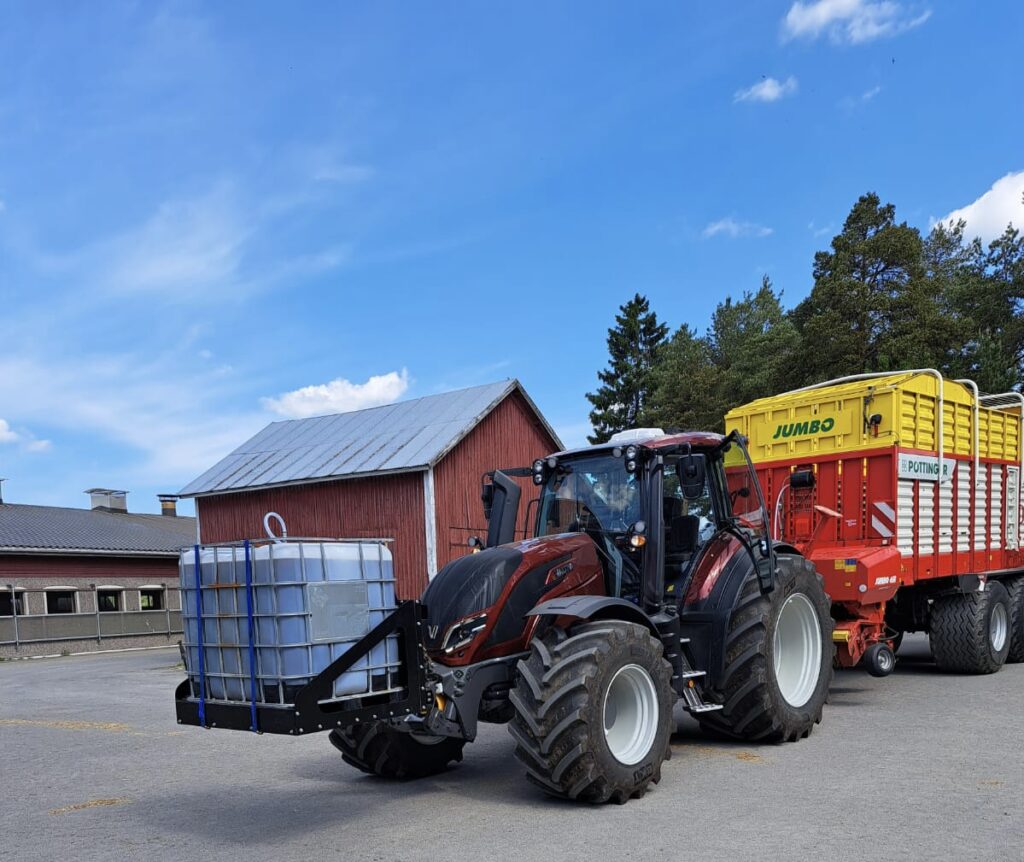
Lootu Oy (Kempele) manufactures metal products and develops sturdy, safe and easy-to-install IBC container racks for tractors and wheel loaders. When a rack is designed for real-world conditions – vibrations, freezing temperatures, uneven farm tracks and the busy peak season – the same frame will serve you reliably. This is particularly valuable in areas where the pace of work varies rapidly (e.g. Kempele, Oulu, Liminka, Tyrnävä and Raahe), but equally so in the Vaasa, Joensuu, Kuopio, Kajaani and Kokkola regions.
If your aim is to reduce accidents and improve productivity during the working day, I’d also recommend reading the content that outlines the pitfalls of transport: Transporting an IBC container safely by tractor: the 7 most common mistakes and how to avoid them.
When the same rack is used for several seasons The following benefits are particularly evident in everyday life.
Fewer transport vehicles When the fastening system works properly, you won’t need separate solutions for each fluid.
Faster roll-out The same hoses and fittings; only the operating fluid and the workstation change.
Less mess Planned drainage and flushing routines reduce runoff and odour nuisance.
Safer handling A stable stand and controlled lifting movements reduce the risk of tipping and splashing.
Also bear in mind the basic principle: an IBC container is a standardised container, but the risks associated with its contents vary. If you are transporting water intended for use in food or feed applications, keep the container’s cleanliness and usage history under close control. For general background information on IBC containers, you can refer, for example, to the following description: Intermediate bulk container (Wikipedia).

Water for irrigation, washing and “seasonal fluids”: scheduling usage improves efficiency
The most practical way to make the most of its versatility is to use it according to the season. In spring and early summer, the tank often serves as a transfer point for irrigation water: the needs of seedlings, new plantings, dust suppression and garden maintenance can vary from week to week. When the rack is mounted on a tractor, you can get the water close to where it’s needed without a separate trailer, and you can set up a simple distribution system (hose reel, quick-connect couplings, nozzle/tap arrangement).
In summer and autumn, washing water takes centre stage on many farms: cleaning machinery, tools, garden furniture and premises becomes easier when water is available right where the work is being done. When it comes to water for washing, it’s also worth considering how to manage runoff: where you wash, where the water goes and how to prevent slipping. Versatility does not mean “one tank for everything at once”, but rather that the same frame and rack make fluid logistics manageable and quick.
If you also carry out cleaning and maintenance work on a contract basis or at property management sites, find out more about this topic: Water for brushing. There you’ll find ideas on how the transport and use of water are integrated into the quality of work and time schedules.
This versatility stems from the fact that the rack and connections are always “ready for action” – so it’s the fluid that’s changed, not the operating procedure.
Seasonal thinking in practice By following these three principles, you’ll avoid any hassle when changing the operating fluid.
Name the usage scenarios “Watering”, “washing”, “preservative/fertiliser” – and decide which connectors each one requires.
Standardise equipment The same hose length, the same reel and the same protective cover make it quicker to use.
Create a flushing routine A quick, repeatable wash and dry cycle before changing the fluid helps to minimise surprises.
Keep a record Notes on the tank and in the maintenance log: what was in it, when it was cleaned and who did it.
The essence of design: scaffolding, anchor points and work ergonomics in practical working conditions
When An IBC container on a farm Whether it’s being transported on a tractor or a wheel loader, load management is at the heart of the design: how the container is positioned on the rack, how it is secured, how lifting is carried out, and in what situations the load might shift. A good rack is not just a “frame”, but part of the work process: it guides the container to the correct position and provides clear attachment points.
Ergonomics is evident in the little things in everyday life. When the tap or valve, the hose outlet and the reel are at a sensible height, you avoid having to bend down and make unnecessary lifting movements. Meanwhile, when filling a tank can be done in a controlled manner (e.g. opening the lid and routing the filling hose), you minimise splashes and slippery surfaces. In the property maintenance and contracting sectors, the same applies on building sites: when water logistics are well planned, work isn’t interrupted by having to “fetch water every now and then”. More on this topic: Water logistics in property maintenance are becoming more efficient.
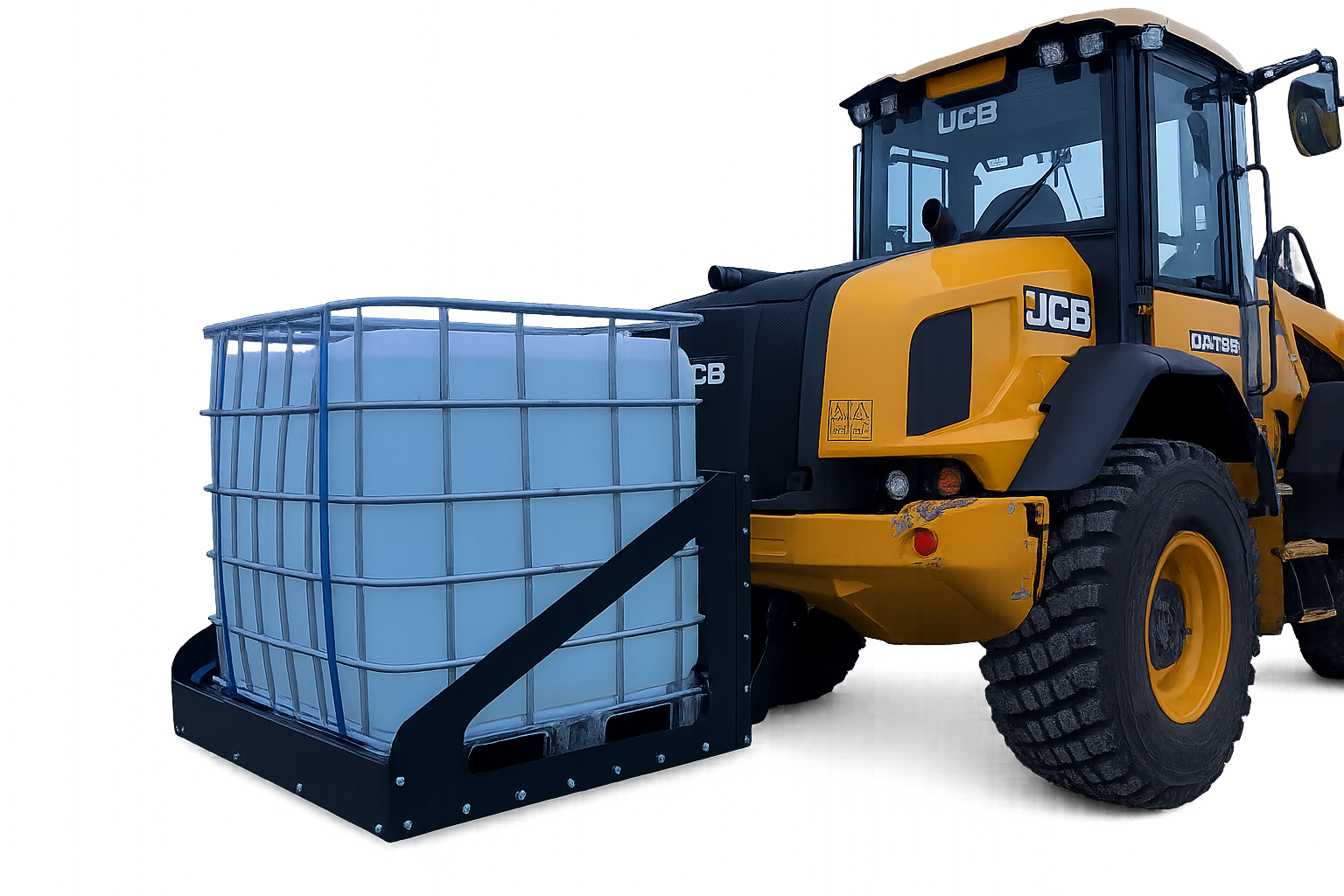
If you’re choosing a pram or comparing different models, do also take a look at our guide to selection criteria: How to choose the right IBC container rack. It allows you to plot frame loads, fixings and applications on the same map – without any guesswork.
A brief note
When the frame is designed for the right machine (tractor or wheel loader), the same IBC assembly can be used for a range of tasks without compromising on safety.
Fluids on a single platform: safety and compatibility when switching from water to chemicals
Versatility often means that the tank sometimes contains just water and at other times “seasonal liquids”, such as preservatives or liquid fertilisers. In such cases, it is essential to distinguish between two things: mechanical safety (scaffolding, fastening, lifting) and content security (substance properties, splashes, compatibility, cleaning). Even if the rack is the same, the properties of the liquid can alter the working method: protective equipment, splash control and the filling/emptying method all take on a different level of importance.
Lootu Oy’s preservative racks are designed to withstand pressure, vibration and fluctuations in weather conditions, whilst providing a secure fit without the need for specialised tools. This is essential because, with chemicals, even a small spill can mean cleaning-up, damage to equipment or a work stoppage. When the container remains stable and the connections are easy to check, routines stay under control even when things get busy.
| Usage | Objective | Key design consideration |
|---|---|---|
| Water for irrigation | Fast delivery to destinations | Hose, nozzle/valve and easy filling |
| Washing water | Tidiness of the building site or yard | Spill control, ergonomic operation and safe movement |
| Preservatives / liquid fertilisers | Safe handling and dispensing | Stability, minimising splashes, clear routines and labelling |
When changing the working fluid, don’t cut corners when cleaning. Follow a clear process: draining, rinsing, drying and labelling. If your work regularly involves handling preservatives or fertilisers, it is a good idea to also read the section focusing on safety and ergonomics: Handling liquid fertilisers and preservatives on the farm.
Maintenance and day-to-day routines: how to extend the service life of your rack and tank
In order to An IBC container on a farm It is genuinely versatile year in, year out, so maintenance cannot be put off until “some time in the future”. It is good practice to carry out inspections in conjunction with seasonal changes: before the irrigation season, before the peak washing season and before the start of the chemical treatment season. Pay particular attention to mounting points, locks, any welded joints and areas where dirt and moisture accumulate. Even slight play can increase rapidly when the load is subjected to vibrations on uneven roads.
The tank also requires regular maintenance. Check that the valve is tight, the condition of the lid and the protective frame around the body. If the tank is stored outdoors, UV exposure and temperature fluctuations will cause the plastic to deteriorate. During the winter, on the other hand, freezing can damage valves and fittings if water remains trapped in “pockets”. That is why draining and drying out the tank is not just a matter of tidiness, but also a way of preventing damage.
If you want to draw up a clear checklist and maintenance schedule for yourself, I recommend taking a look at the separate guide: Maintenance and inspections: how to extend the service life of an IBC container rack in Finnish conditions. Once things have been written down, they’ll actually get done.
Quick checks that pay for themselves Do the following when changing the working fluid or reassigning the tank to a new task.
Review of mortgages Check the locks, pins and any signs of wear before setting off.
Valve leak test A slight leak is a sign that the seal or thread needs attention.
Condition of hoses and fittings Cracks and loose clamps cause splashes and a mess.
Clear labelling Make a note of the liquid, the date and the person responsible – this helps to prevent misuse.
In conclusion: if your aim is to make versatility the “new normal”, design the system so that it serves both the day-to-day running of the farm and any potential contracting work. Lootu Oy’s (Pekurinpolku 3, 90450 Kempele) strength lies in a rack designed for practical use, which attaches to a tractor or wheel loader and makes IBC handling manageable. If necessary, please enquire directly about a suitable solution and tips on how to use it: 050 374 7690 / [email protected].
Are you looking for a versatile IBC solution without any compromises?
Lootu Oy helps you choose a durable and safe attachment that works on a tractor or wheel loader all year round.
Frequently Asked Questions
Can the same IBC container be used for both watering and washing?
How do I safely switch from water to a preservative or liquid fertiliser?
Why is the quality of the rack crucial to its versatility?
Do you need a tractor or a wheel loader to move an IBC container?
How can I prevent my IBC container and fittings from breaking in winter?
Interested? Get in touch with us!
Please get in touch with us using the form below