

Maintenance and inspections: how to extend the service life of an IBC container rack in Finnish conditions
Maintaining an IBC container rack is one of the easiest ways to reduce life-cycle costs and ensure safety in day-to-day operations on farms and in property maintenance. In Finnish conditions, the rack has to withstand frost, road salt, constant vibration and occasional impacts in yards and on building sites – and it is precisely these factors that shorten its service life if maintenance is neglected…

Voit jättää meille soittopyynnön
Jätä nimesi ja numerosi, niin soitamme takaisin saman päivän aikana.
Maintenance of the IBC container rack is one of the easiest ways to reduce life-cycle costs and ensure safety in day-to-day operations on farms and in property maintenance. In Finnish conditions, scaffolding has to withstand frost, road salt, constant vibration and occasional impacts in yards and on building sites – and it is precisely these factors that shorten their service life if maintenance is left to “sometime in the future”.
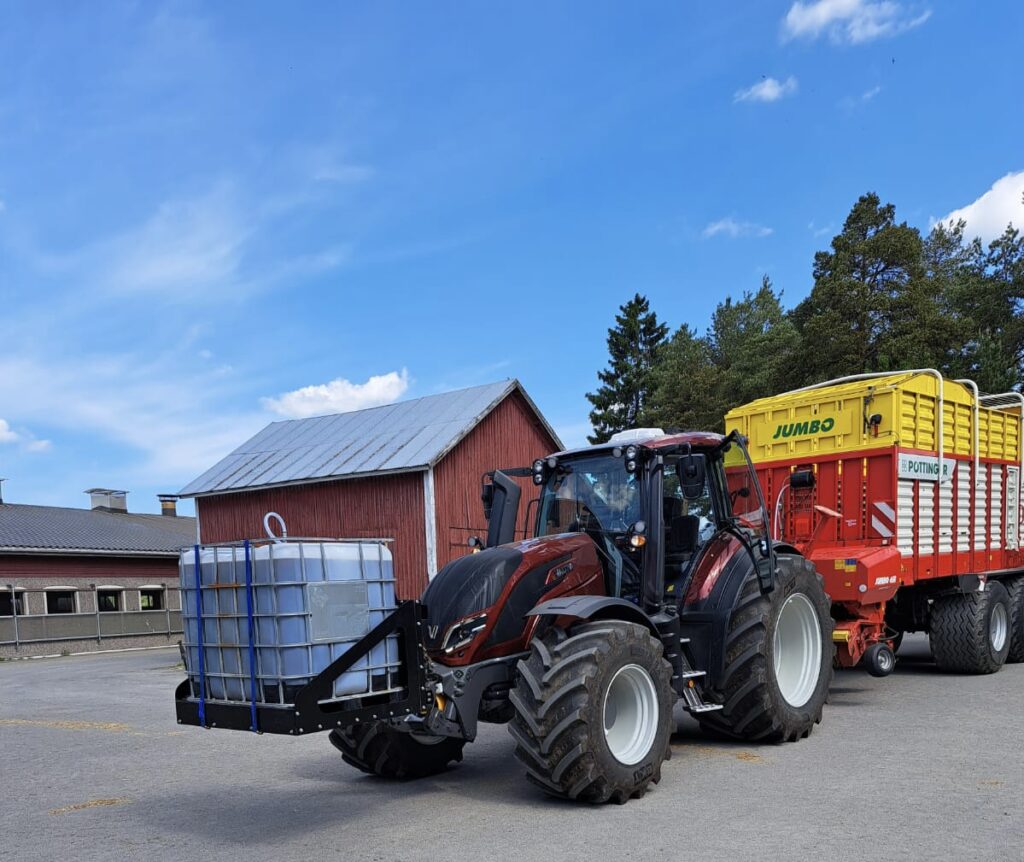
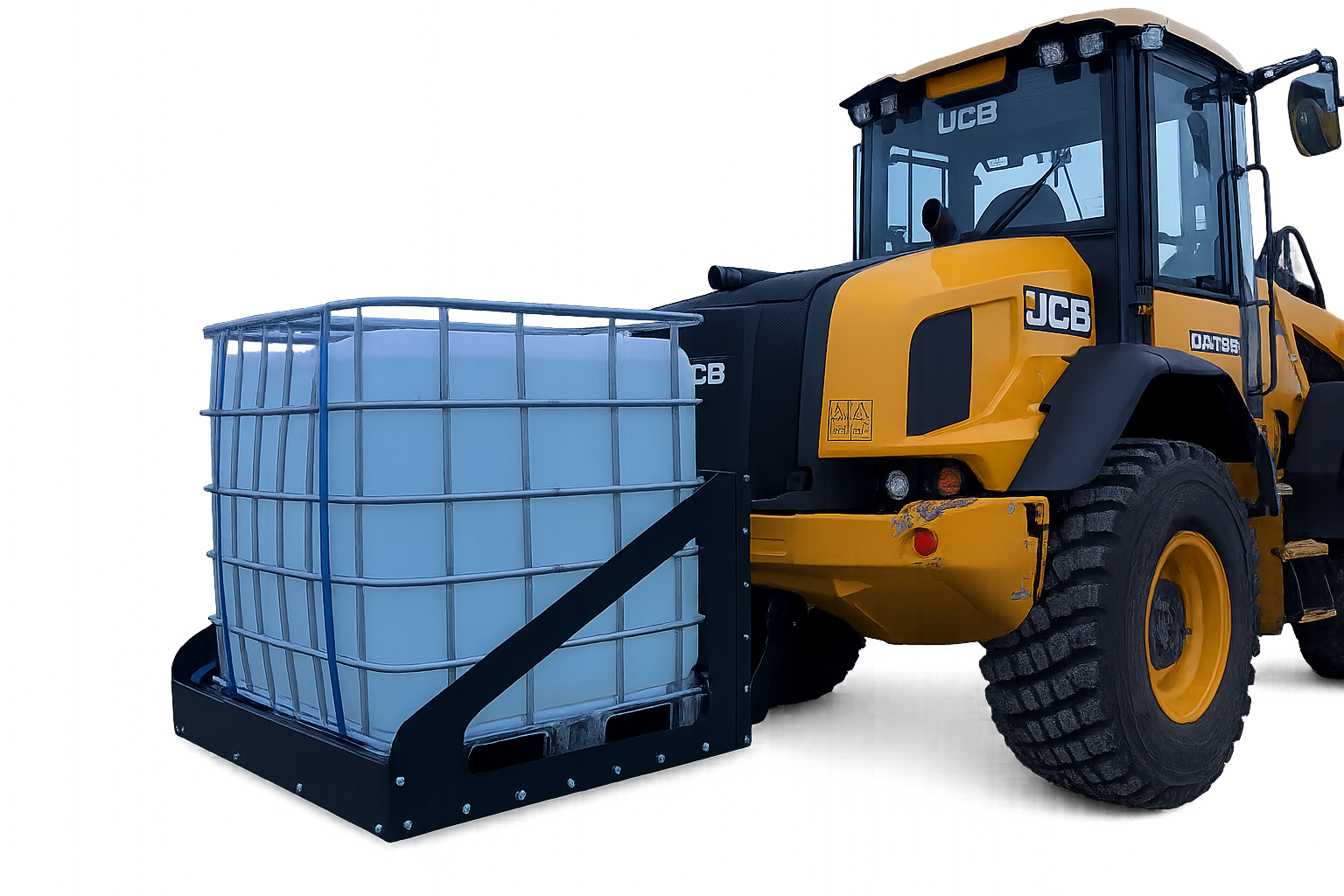
Lootu Oy (Kempele) manufactures sturdy, easy-to-install racks for IBC containers for tractors and wheel loaders. When the frame, fixings and wear parts of the rack are systematically maintained, the same rack will serve you reliably from one season to the next – whether you’re transporting water for irrigation and washing, preservatives or liquid fertilisers.
Maintenance of IBC container racks: risk factors in Finnish conditions
In Finland, the main factors causing wear and tear are temperature fluctuations (freezing and thawing), moisture, salt and dirt. When these factors are combined with vibration and repeated lifting, even small amounts of play increase, coatings break down and corrosion sets in. It is therefore advisable to look specifically for incipient damage during inspections: scratches beneath the paintwork, “sweating” rust spots, hairline cracks in welded joints and deformation at fixing points.
Areas requiring particular attention include the load-bearing corners of the rack, any “stoppers”, the contact surfaces of the tank body, and the components of the mounting system (pins, bolts, locks). If the rack remains attached to the machine throughout the season, fine sand and salt will also accumulate around the fixings. This acts like sandpaper and accelerates wear, particularly when the body moves in response to the load and vibrations.
Quick risk assessment Always do this round before and after the busiest season.
Surface damage Check for cracks in the paintwork and stone chips, where corrosion usually starts.
Welded joints Check for hairline cracks and whether the joints have “come apart”, particularly at the load-bearing corners.
Anchorage points Check whether the holes have become oval-shaped or whether the fastening has started to come loose.
Contact surfaces Check the points where the IBC container “rests” – any abrasions indicate movement.
If you wish to learn more about safe use, you should also read the internal guidance on common mistakes and how to avoid them: Transporting an IBC container safely by tractor: the 7 most common mistakes and how to avoid them. Many “maintenance problems” ultimately turn out to be issues relating to how the equipment is used or the load it is subjected to.
Inspection routine: weekly, monthly and seasonal inspections
The most effective way to ensure serviceability is to schedule inspections according to the workload. In property maintenance, a scaffold may be in use every day for sweeping and washing, whereas on a farm, peak workload may occur during a short, intensive period. In both models, the “framework” of the inspection is the same, but the frequency varies.
On a weekly basis, a visual inspection and a quick check of the fastenings are often sufficient: is the lock tight, is there any rattling when setting off, and are there any new signs of wear? During a monthly check, it’s worth checking the bolts and nuts and comparing the wear points with the previous inspection (a photograph is surprisingly effective). The seasonal inspection is thorough: this is when you clean the bike, repair any surface damage and assess whether any parts need replacing before the next season.
| Level | What are you checking? | Why is it important? |
|---|---|---|
| Weekly inspection | Locks, visible frame damage, rattles and scuffs | You’ll spot the loosening before it causes any major damage or a hazardous situation |
| Monthly inspection | Clearances at fixing points, bolts/pins, wear surfaces | An increase in play usually indicates incorrect loading or repeated vibration |
| Seasonal inspection | Cleaning, surface repairs, inspection of welds, parts requiring replacement | You’ll extend the service life and minimise downtime during the busiest periods |
If you also want to compare machine selection and loading methods based on the application, an internal comparison will help you plan a “maintenance-friendly” day-to-day operation: A tractor or a wheel loader for moving IBC containers? A comparison based on the application.
Proper maintenance is not an extra step, but a way of ensuring that the IBC container rack always performs in the same way – even when weather conditions and scheduling are at their worst.
Maintenance of an IBC container rack under heavy use: monitoring of wear parts
With heavy use, wear and tear first becomes apparent as small changes: the tank “sits” differently, the frame starts to become polished in certain places, or more force than usual is needed to fasten it. In these situations, it is worth considering which part has worn out and why. The root cause is often found in movement under load (play), impact (the frame hitting the ground or structures) or constant abrasion (sand, salt, dust).
It is best to keep the checks specific: identify 4–6 checkpoints (for example, mounting points, contact surfaces, locks and the corners of the frame) and make a note of your observations. When the same scaffold is used by several operators, a common “language of condition” prevents situations where someone gets used to deviating from the norm and regards it as normal. If necessary, standardise usage too: the same loading sequence, the same tightening method and the same transport speed on the construction site.
Signs of wear and tear that you should address straight away Identifying these issues in good time saves on bodywork repairs.
Oval-shaped holes The shape of the mounting point changes if the lock becomes loose due to vibration.
New shiny grazes The shine indicates movement or the “abrasive” effect of dust.
Uneven fit If the tank does not sit in the same way as before, check the support surfaces and look for any warping.
“Live” lock A loosening of the lock is a typical sign of play or an incorrect direction of loading.
In Finland, corrosion is the most visible problem for many people, but it is often caused by a combination of factors: surface damage + moisture + salt. If you’d like some general background on corrosion and why it occurs, Wikipedia provides a good, basic overview: Corrosion.

Cleaning and protection: keeping dirt, salt and chemicals under control
It is worth thinking of cleaning as part of the inspection: once the frame is clean, cracks, scuffs and damage to the finish can be spotted quickly. In property maintenance, the biggest challenge is often fine sand and road salt, whilst on farms, organic dirt and chemical splashes (such as preservatives and fertilisers) can be a particular issue. In all cases, the principle is the same: remove the dirt before it absorbs moisture and starts to “work” against the surface.
In practice, gentle but sufficiently thorough washing is better than occasional washing carried out with “excessive” pressure, which can force dirt into the seams. Also bear in mind drying: if the scaffolding is left wet under a canopy or in a machine hall, the moisture will not evaporate and the risk of corrosion increases. If necessary, open up the structure’s drainage channels (if there are any) and ensure that there are no “pockets” left in the scaffolding where water can pool.
A brief note
When IBC containers are moved between multiple sites, the water logistics process also contributes to wear and tear on the racks. A clear operating procedure reduces unnecessary jostling and impacts.
How to organise the transport of water for washing and watering to construction sites
When it comes to protecting surfaces, speed is of the essence: as soon as you notice a stone chip or a crack in the paintwork, repair it before the rust has time to spread. If the scaffolding is splashed with chemicals, rinse off the splashes as soon as possible – many substances do not “show” straight away, but can weaken the surface over time. Always use products and methods that are suitable for both metal and any rubber or plastic protective surfaces.
Storage, winter use and power cuts: how to avoid surprises
Storage has a greater impact on a product’s lifespan than many people realise. When a rack is left on the ground, it is exposed to standing water, freezing and splashes throughout the winter. The best option is a dry, well-ventilated space where the rack is off the ground and air can circulate. If indoor storage isn’t possible, place the rack on a platform and cover it so that the tarpaulin doesn’t allow condensation to collect directly on the metal surface.
In winter use, rigidity and predictability are crucial. In freezing conditions, even small amounts of play can feel greater, and ice can prevent the locking mechanisms from working. Before use in winter, carry out a brief “functional check”: check the movement of the locks, the tightness of visible fastenings and how well the rack fits onto the machine. If the rack creaks, catches or the lock does not “engage” properly, stop and identify the cause before lifting.
If you are changing the carriage or adjusting the load (for example, a different attachment or a new application), it is advisable to check the correct specifications and attachment points in advance. The in-house guide helps you make the right choice and reduces wear and tear caused by incorrect loading: How to choose the right IBC container rack.
Reducing life-cycle costs: documentation, spare parts and operating procedures
When the aim is to reduce life-cycle costs, a simple “fix it when it breaks” approach ends up being expensive: downtime often occurs at the busiest times, and the damage has time to spread to the frame. A practical solution is a simple maintenance log. It could be a piece of paper on the wall of the hall or a note on your mobile phone, as long as you record the date, your observations and the action taken. If you have several racks, label them (for example, with a sticker) and keep track of each one individually.
When it comes to spare parts, it makes most sense to stock up on those parts that typically wear out or go missing: parts relating to locks and small fasteners. It is also worth keeping the necessary supplies for spot-painting surfaces to hand, so that repairs can be carried out immediately. If the equipment is subject to heavy use (contract work, daily property maintenance), proactive replacement may be the most cost-effective option: for a small cost, you can prevent frame fatigue and the need for more extensive repairs.
An approach that has a direct impact on costs These routines ensure that the equipment remains safe and reliable.
Photograph checkpoints Taking the same shot from the same angle every month quickly reveals any changes.
Repair any surface damage straight away A small repair will stop the corrosion from spreading before it gets any worse.
Agree on a set of common operating instructions Consistent loading and securing reduce the strain on individual drivers.
Keep spare basic parts to hand Small parts bring work to a halt surprisingly often, even if the main body is in good condition.
Lootu Oy’s scaffolding has been developed to meet the needs of practical work: for tractors and wheel loaders, in property maintenance and on farms. By combining the right mounting solution with a clear inspection routine and smart cleaning, you’ll not only ensure safe operation but also predictable costs – and fewer surprises in the middle of the season. If you need installation instructions or want to check compatibility, you’ll also find further information in the guides on the website.
Do you want to make sure your rack will last from one season to the next?
Please contact Lootu Oy in Kempele and tell us what you intend to use it for – we’ll help you choose and maintain a safe IBC container rack.
Frequently Asked Questions
In practice, how often should an IBC container rack be inspected?
What are the most common signs that a scaffold has become unsafe to use?
How do I clean the rack properly if it is exposed to salt and sand?
Can the rack be stored outdoors over the winter, and what should be borne in mind in that case?
What is the point of maintenance and inspection records if the rack appears to be in good condition?
Interested? Get in touch with us!
Please get in touch with us using the form below